Monday, November 24, 2014

The Two Fitness Myths You Still Believe Are True
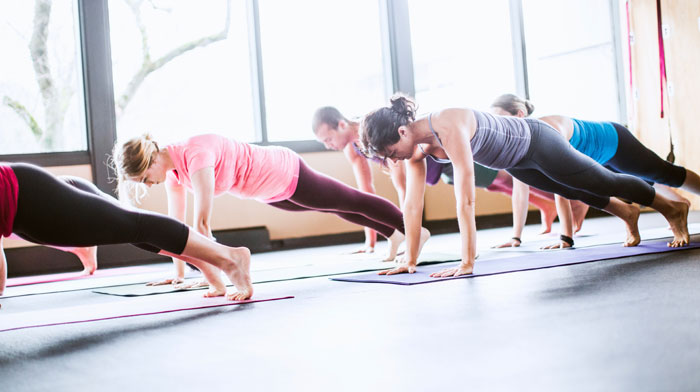
In a world full of information, it’s often hard to differentiate between what’s fitness fact and what’s fiction. On occasion it’s easy to spot—like claims that performing one particular move for just two minutes a day will melt inches off your waistline—but sometimes the information being circulated is rooted in science, yet applied incorrectly. Let’s take a look at two of these examples and understand why, when it comes to exercise, more doesn’t always equal better.
Fitness Myth #1: All Intensity, All the Time
While not an entirely new approach to exercise, high-intensity interval training—most commonly referred to as HIIT—has become a buzz word in the world of fitness over the last few years. As a result, many exercisers have adopted the idea of “training smarter, not longer” by engaging in more intense workouts. The problem is, many people are now applying this protocol to the majority—if not all—of their weekly exercise sessions. But as is the case with most things in life, it is possible to have too much of a good thing.
Given that exercise is physical stress applied to the body, the way in which the stress is applied and the amount of time the body is allowed to recover plays an important role in determining the outcome of any exercise program, says Pete McCall, international fitness educator and science officer at Institute of Motion. “By definition, HIIT is the highest type of exercise stress that can be applied,” explains McCall, “and too much HIIT, too often does not allow the physiological systems of the body to properly recover and make the necessary adaptations.”
McCall adds that HIIT places a great deal of mechanical stress on the involved fascia and connective tissue, as well as a lot of metabolic stress on the muscle to create energy to initiate and maintain the movement. Without adequate recovery—at least 48 hours between HIIT sessions—the body will not have the levels of hormones necessary to promote the essential recovery and repair process, something which can cause more harm than good in the long run. “More than four days of HIIT per week could lead to overtraining and tissue fatigue, both of which could create injury that limits the ability to do any exercise at all.”In a world full of information, it’s often hard to differentiate between what’s fitness fact and what’s fiction. On occasion it’s easy to spot—like claims that performing one particular move for just two minutes a day will melt inches off your waistline—but sometimes the information being circulated is rooted in science, yet applied incorrectly. Let’s take a look at two of these examples and understand why, when it comes to exercise, more doesn’t always equal better. Fitness Myth #1: All Intensity, All the Time While not an entirely new approach to exercise, high-intensity interval training—most commonly referred to as HIIT—has become a buzz word in the world of fitness over the last few years. As a result, many exercisers have adopted the idea of “training smarter, not longer” by engaging in more intense workouts. The problem is, many people are now applying this protocol to the majority—if not all—of their weekly exercise sessions. But as is the case with most things in life, it is possible to have too much of a good thing. Given that exercise is physical stress applied to the body, the way in which the stress is applied and the amount of time the body is allowed to recover plays an important role in determining the outcome of any exercise program, says Pete McCall, international fitness educator and science officer at Institute of Motion. “By definition, HIIT is the highest type of exercise stress that can be applied,” explains McCall, “and too much HIIT, too often does not allow the physiological systems of the body to properly recover and make the necessary adaptations.” McCall adds that HIIT places a great deal of mechanical stress on the involved fascia and connective tissue, as well as a lot of metabolic stress on the muscle to create energy to initiate and maintain the movement. Without adequate recovery—at least 48 hours between HIIT sessions—the body will not have the levels of hormones necessary to promote the essential recovery and repair process, something which can cause more harm than good in the long run. “More than four days of HIIT per week could lead to overtraining and tissue fatigue, both of which could create injury that limits the ability to do any exercise at all.” For the time-pressed exerciser, the beauty of HIIT is it can provide many of the same benefits of a 60- 90-minute low-intensity, steady-state cardio session in just a fraction of the time. But it’s important to utilize this effective training approach as part of a varied, well-organized, complete training plan. McCall notes that, in general, a HIIT day should be followed by a lower-intensity day of steady-state cardio training, or an activity such as yoga or body-weight strength training utilizing the TRX Suspension Trainer. “Based on the evidence, as well as the ability of the body to recover, HIIT two to three days a week would be appropriate if a full night’s sleep is possible for optimal recovery.” Fitness Myth #2: The Longer You Plank, the Better Your Results With a plethora of plank challenges circulating social media, many exercisers mistakenly believe that the longer you can hold a plank, the better it is for your overall fitness. However, before you set out on a quest to conquer that seven-minute plank, it’s important to first re-evaluate the overall purpose of exercise, and how this popular move best fits into your personalized fitness plan. Life is full of movement, so the intent of our exercise sessions should be to enhance our ability to move through life (literally) with greater ease, and to allow us to engage in the activities we enjoy and the tasks we need to perform each day. The plank has become commonplace in many workouts because it helps develop full-body stability and control when moving, shares Jonathan Ross, award-winning personal trainer and author of the book Abs Revealed. But this doesn’t mean that longer plank times will produce better results—in fact, it may not be the best use of the limited training time that most people have. An isometric exercise like the plank, explains Ross, burns the least amount of calories yet provides a high level of discomfort. “With no movement occurring, less work is done by the muscles and you also get less blood flow, so the waste products accumulate more rapidly. The end result is you maximize burning in the muscle yet with a minimum number of calories being burned.” Instead of devoting a chunk of your workout to holding one plank for an extended period of time, consider honing in on proper alignment and perfecting your plank form to elicit more effective results. If you find that you’re easily able to hold a good plank for 20 to 30 seconds, instead of adding more time, consider adding movement through an assortment of creative plank variations. You cannot get better at moving in life by not moving in your workouts, says Ross. “Longer planks are like staying in first grade forever—it’s like learning the alphabet over and over again.” By Jessica Matthews, MS, E-RYT Jessica Matthews, M.S., E-RYT is assistant professor of exercise science at Miramar College. As a leading fitness expert, writer and educator Jessica is a regular contributor to numerous publications, including Shape and Oprah.com. She holds a B.S. in physical education teacher education from Coastal Carolina University and M.S. in physical education from Canisius College. She is a certified Personal Trainer, Group Fitness Instructor and Health Coach through the American Council on Exercise (ACE) as well as an Experienced Registered Yoga Teacher (E-RYT) through Yoga Alliance and trained stand-up paddleboard (SUP) yoga instructor. Prior to teaching at Miramar, Jessica worked full-time ACE, serving in a number of key roles including exercise physiologist, certification director and senior health and fitness editor. Her past work also includes serving as aquatics director at Conway Medical Wellness and Fitness Center and designing health and physical education curriculum for grades K-12.
For the time-pressed exerciser, the beauty of HIIT is it can provide many of the same benefits of a 60- 90-minute low-intensity, steady-state cardio session in just a fraction of the time. But it’s important to utilize this effective training approach as part of a varied, well-organized, complete training plan. McCall notes that, in general, a HIIT day should be followed by a lower-intensity day of steady-state cardio training, or an activity such as yoga or body-weight strength training utilizing the TRX Suspension Trainer. “Based on the evidence, as well as the ability of the body to recover, HIIT two to three days a week would be appropriate if a full night’s sleep is possible for optimal recovery.”
Fitness Myth #2: The Longer You Plank, the Better Your Results
With a plethora of plank challenges circulating social media, many exercisers mistakenly believe that the longer you can hold a plank, the better it is for your overall fitness. However, before you set out on a quest to conquer that seven-minute plank, it’s important to first re-evaluate the overall purpose of exercise, and how this popular move best fits into your personalized fitness plan.
Life is full of movement, so the intent of our exercise sessions should be to enhance our ability to move through life (literally) with greater ease, and to allow us to engage in the activities we enjoy and the tasks we need to perform each day. The plank has become commonplace in many workouts because it helps develop full-body stability and control when moving, shares Jonathan Ross, award-winning personal trainer and author of the book Abs Revealed. But this doesn’t mean that longer plank times will produce better results—in fact, it may not be the best use of the limited training time that most people have. An isometric exercise like the plank, explains Ross, burns the least amount of calories yet provides a high level of discomfort. “With no movement occurring, less work is done by the muscles and you also get less blood flow, so the waste products accumulate more rapidly. The end result is you maximize burning in the muscle yet with a minimum number of calories being burned.”
Instead of devoting a chunk of your workout to holding one plank for an extended period of time, consider honing in on proper alignment and perfecting your plank form to elicit more effective results. If you find that you’re easily able to hold a good plank for 20 to 30 seconds, instead of adding more time, consider adding movement through an assortment of creative plank variations. You cannot get better at moving in life by not moving in your workouts, says Ross. “Longer planks are like staying in first grade forever—it’s like learning the alphabet over and over again.”
 By Jessica Matthews, MS, E-RYT
Jessica Matthews, M.S., E-RYT is assistant professor of exercise science at Miramar College. As a leading fitness expert, writer and educator Jessica is a regular contributor to numerous publications, including Shape and Oprah.com. She holds a B.S. in physical education teacher education from Coastal Carolina University and M.S. in physical education from Canisius College. She is a certified Personal Trainer, Group Fitness Instructor and Health Coach through the American Council on Exercise (ACE) as well as an Experienced Registered Yoga Teacher (E-RYT) through Yoga Alliance and trained stand-up paddleboard (SUP) yoga instructor. Prior to teaching at Miramar, Jessica worked full-time ACE, serving in a number of key roles including exercise physiologist, certification director and senior health and fitness editor. Her past work also includes serving as aquatics director at Conway Medical Wellness and Fitness Center and designing health and physical education curriculum for grades K-12.
Tuesday, November 18, 2014

Sunday, November 16, 2014



Wednesday, October 22, 2014
Top 25 Fitness Motivational Quotes
By Chris Freytag, Fitness Expert for Prevention Magazine & ACE Board Member
I am addicted to motivational words and phrases. I have them on my laptop screen saver and on my iPhone. I wear a necklace that says “Live Life Well”. I have bracelets with coins saying “Believe, Sweat, and Inspire”.
I get energy from words. I glance at them, read them, repeat them and they channel my thoughts in a positive way. It’s a great way to keep you motivated with your fitness program. It can be as simple as putting the word or phrase on a post-it note on your computer or bathroom mirror – somewhere you will see it every day.Here are 25 of my favorite motivational quotes from some famous and not-so-famous folks. I hope you find inspiration in them like I have!
 1. Strive for progress, not perfection.
-Unknown
2. You want me to do something... tell me I can't do it.
-Maya Angelou
-Maya Angelou
3. You miss 100% of the shots you don't take.
-Wayne Gretzky
-Wayne Gretzky
4. If you don’t make mistakes, you aren’t really trying.
-Unknown
-Unknown
5. You live longer once you realize that any time spent being unhappy is wasted.
-Ruth E. Renkl
-Ruth E. Renkl
6. Strength does not come from physical capacity. It comes from an indomitable will.
-Mahatma Gandhi
-Mahatma Gandhi
7. Motivation will almost always beat mere talent.
-Norman R. Augustine
-Norman R. Augustine
8. I'd rather be a failure at something I enjoy than a success at something I hate.
-George Burns
-George Burns
9. Energy and persistence conquer all things.
-Benjamin Franklin
-Benjamin Franklin
10. Nothing great was ever achieved without enthusiasm.
-Ralph Waldo Emerson
-Ralph Waldo Emerson
11. No act of kindness, however small, is ever wasted.
-Aesop
-Aesop
12. Insanity: doing the same thing over and over again and expecting different results.
-Albert Einstein
-Albert Einstein
13. Ability is what you're capable of doing. Motivation determines what you do. Attitude determines how well you do it.
-Lou Holtz
-Lou Holtz
14. Motivation is what gets you started. Habit is what keeps you going.
-Jim Ryan
-Jim Ryan
15. I've missed more than 9,000 shots in my career. I've lost almost 300 games. 26 times, I've been trusted to take the game winning shot and missed. I've failed over and over and over again in my life. And that is why I succeed.
-Michael Jordan
-Michael Jordan
16. Fear is what stops you... courages is what keeps you going.
-Unknown
-Unknown
17. The finish line is just the beginning of a whole new race.
-Unknown
-Unknown
18. The difference between a goal and a dream is a deadline.
-Steve Smith
-Steve Smith
19. Just do it.™ -Nike
20. In seeking happiness for others, you find it for yourself.
-Anonymous
-Anonymous
21. The secret of getting ahead is getting started.
-Mark Twain
-Mark Twain
22. It's not who you are that holds you back, it’s who you think you’re not.
-Anonymous
-Anonymous
23. Luck is a matter of preparation meeting opportunity.
-Oprah Winfrey
-Oprah Winfrey
24. It's never too late to become what you might have been.
-George Eliot
-George Eliot
25. Clear your mind of can’t.
-Samuel Johnson
-Samuel Johnson
Chris Freytag, has been educating others on how to live a healthy lifestyle for more than 18 years. She is the author of the 2 Week Total Body Turnaround and serves as the fitness expert/columnist for Prevention Magazine as well as the fitness contributor for the NBC affiliate in Minneapolis. Chris has created more than a dozen fitness DVDs, is a trainer for GAIAM and SPRI Products and sits on the board of directors for the American Council on Exercise. She is the mother of three teenagers and resides in Minneapolis, Minn., with her family.
Friday, October 17, 2014


Subscribe to:
Posts (Atom)